Ever found yourself pondering the vast landscape of human spirituality, searching for meaning or a deeper connection in a world that often feels overwhelmingly fast-paced?

It’s a journey many of us embark on, and it frequently leads us down fascinating paths. We often think of “religion” with its established texts, shared rituals, and structured communities, a familiar framework for millions.
But then there are the whispers of ancient wisdom, the powerful, personal journeys into what many call “shamanism,” practices often rooted in direct experience with the spiritual realm, nature, and the unseen.
I’ve personally observed that in today’s world, where individual well-being and a bespoke sense of spirituality are becoming increasingly central, distinguishing between these profound systems is more relevant than ever.
It’s not just an academic exercise; it’s about understanding the very fabric of how we seek guidance, healing, and purpose. While both address humanity’s profound questions and our place in the cosmos, they approach these quests through dramatically different lenses – one often communal and creed-based, the other intensely personal, experiential, and often highly individual.
The nuances are rich, and exploring them can truly expand your own spiritual vocabulary. Let’s get a clear picture of these compelling differences.
Navigating the Source of Spiritual Wisdom
Where Truth Resides: External Texts vs. Inner Visions
When we talk about traditional religions, one of the first things that usually comes to mind is a sacred text. Think about it – the Bible, the Quran, the Torah, the Vedas, these are often considered the ultimate authorities, the bedrock of belief for millions.
For me, growing up, it felt like these ancient writings held all the answers, passed down through generations, almost untouched by time. They offer a comprehensive cosmology, ethical guidelines, and stories that explain the inexplicable.
They’re a blueprint, if you will, for understanding the divine and your place within a larger cosmic order. This kind of spiritual framework thrives on continuity and the meticulous preservation of tradition.
It’s about accepting a divinely revealed truth, often interpreted by an established clergy, that guides adherents through life’s biggest questions. You find comfort in knowing that countless others have walked this same path, drawing strength from shared scripture and collective understanding.
It’s a powerful sense of belonging that springs from a common narrative.
The Path to Understanding the Divine
Now, flip that coin over and look at shamanism. It’s a completely different ballgame, really. Instead of a holy book, the primary source of wisdom is direct, personal experience.
I remember reading about a shamanic journey where someone described feeling the pulse of the Earth beneath them, not metaphorically, but truly, physically connected.
That’s the essence of it! Shamanism emphasizes altered states of consciousness, often induced through drumming, dancing, or sometimes plant medicines, to journey into non-ordinary reality.
There, individuals seek guidance, healing, and knowledge directly from spirits, ancestors, or animal guides. There’s no single, universally agreed-upon text, and interpretation isn’t about scholastic debate over ancient verses, but about the profound, often visceral, insights gained from these direct encounters.
It’s raw, immediate, and deeply personal. The truth isn’t something read; it’s something felt, seen, and heard in the depths of a spiritual journey. It’s an empowering, albeit sometimes daunting, process of self-discovery where the individual becomes the primary interpreter of their own spiritual experiences.
Community Bonds vs. Solitary Journeys
Shared Rituals and Collective Identity
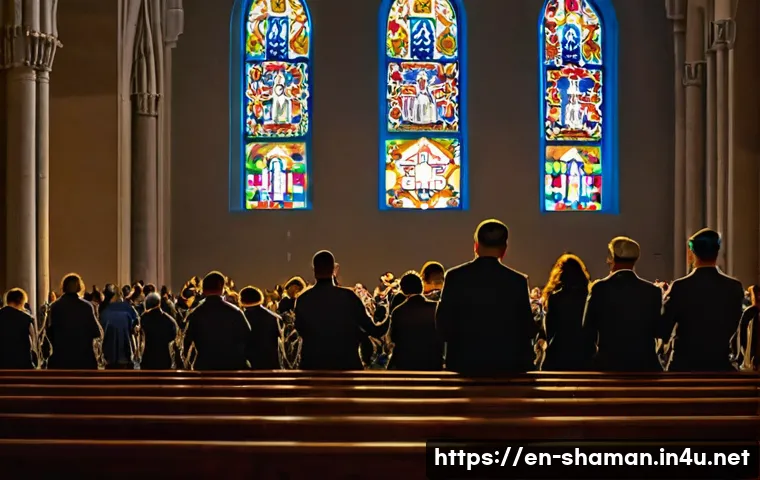
In the realm of organized religion, community is absolutely central. Think of Sunday services, weekly gatherings, communal prayers, or shared festivals.
These aren’t just social events; they’re vital threads weaving together the spiritual fabric of a group. I’ve always been fascinated by how these shared rituals create such a profound sense of unity and belonging.
You stand shoulder-to-shoulder with others who believe what you believe, reaffirming your faith through collective action. The rituals themselves are often highly structured, prescribed, and have been performed in much the same way for centuries, linking current worshippers to a long lineage of tradition.
This collective participation offers comfort, a sense of shared purpose, and often a strong support system for individuals going through life’s challenges.
It’s like being part of a spiritual family, where everyone understands the unspoken rules, the common language of faith, and the mutual expectations that bind them together.
It’s a powerful source of communal identity and strength.
The Highly Personal Nature of Spiritual Exploration
Shamanism, on the other hand, often leans more towards individual exploration, even when practiced within a group setting. While there might be communal drumming circles or ceremonies, the core of the shamanic experience—the journeying itself—is intensely personal.
When a shaman goes on a journey, or when an individual undertakes their own vision quest, they’re entering a private, internal landscape. It’s not about reciting a creed with a congregation; it’s about navigating the spiritual realms alone, guided by spirits rather than human doctrine.
I’ve heard stories from people who describe these journeys as intensely solitary, even when physically surrounded by others. The insights gained are unique to the individual, tailored to their specific questions or needs.
This isn’t to say there’s no community in shamanism; often, there are mentorships and smaller, more intimate gatherings. But the emphasis is often on empowering the individual to connect directly with spirit, fostering a deep sense of self-reliance and personal responsibility for one’s spiritual path, rather than relying on a large, established collective for guidance.
Leaders and Guides: Intermediaries or Facilitators?
Priests, Pastors, and the Established Order
In most religious traditions, the role of a leader—be it a priest, pastor, rabbi, imam, or monk—is incredibly well-defined and often comes with a significant amount of authority.
These individuals typically undergo extensive theological training, are ordained, and serve as intermediaries between the divine and the congregation.
They interpret sacred texts, administer sacraments, lead rituals, and provide moral and spiritual guidance. From my perspective, they act as shepherds, guiding their flock according to established doctrines.
Their authority is usually derived from their position within the religious hierarchy and their mastery of the tradition’s teachings. It’s a role that demands adherence to established rules and a deep understanding of centuries of theological development.
The structure is designed to ensure consistency and continuity of faith, with the leader acting as a primary channel for divine communication and community organization.
They are the keepers of the sacred knowledge, making sure the spiritual practices are performed correctly and the community stays on the prescribed path.
Shamans: Bridging Worlds Through Direct Experience
Shamanic practitioners, in contrast, operate from a very different paradigm. While they are undoubtedly respected and powerful figures within their communities, their authority stems not from an ordination or a textual degree, but from their direct, lived experience with the spirit world.
A shaman is someone who has traversed the boundaries between ordinary and non-ordinary reality, interacted with spirits, and brought back wisdom, healing, or guidance.
They are often seen as “wounded healers” who have overcome personal crises or illnesses through their spiritual abilities, thus demonstrating their capacity to help others.
I’ve learned that a shaman’s role is less about interpreting ancient texts and more about actively facilitating a connection to the spiritual realm for themselves and for others.
They might perform rituals to retrieve lost soul parts, clear negative energies, or communicate with ancestors, but their power comes from their personal relationship with the unseen.
They aren’t necessarily part of a rigid hierarchy; their legitimacy is earned through their demonstrated ability to navigate spiritual landscapes and bring tangible results.
Healing and Wholeness: Different Prescriptions
Spiritual Comfort and Moral Frameworks
When it comes to healing and achieving a sense of wholeness, religious traditions often approach this through a lens of moral and spiritual rectitude.
The focus is frequently on forgiveness, repentance, prayer, and adhering to ethical guidelines laid out in sacred texts. The idea is that by living a righteous life, maintaining a strong relationship with the divine, and participating in communal rituals, one can achieve spiritual peace and well-being.
Personal struggles, illnesses, or misfortunes might be seen as tests of faith, consequences of sin, or simply part of the human condition to be endured with divine grace.
I’ve noticed that religious healing often involves psychological and communal support, offering comfort, hope, and a framework for understanding suffering within a larger spiritual context.
The healing isn’t just physical; it’s deeply tied to one’s moral compass and relationship with their deity, aiming for holistic well-being through faith and adherence to divine will.
It’s about finding solace and strength within a pre-established spiritual order, knowing that higher powers are at play.
Energy Work, Soul Retrieval, and the Natural World
Shamanic healing, however, often takes a much more direct, energetic, and sometimes dramatic approach. Instead of relying solely on prayer or moral conduct, shamans actively work with energies and spirits to address the root causes of imbalance.
This can involve practices like soul retrieval, where a shaman journeys to bring back parts of a person’s soul believed to have been lost due to trauma.
It might also include extraction work, removing intrusive energies or spirits that are causing illness, or journeying to find power animals for guidance and protection.
My understanding is that shamanism views illness not just as a physical ailment, but as a symptom of spiritual disharmony, disconnection from nature, or an imbalance in one’s energetic field.
The healing process is often highly experiential and involves active participation from the client, even if that participation is simply being open to the shaman’s work.
The focus is on restoring balance, power, and connection, often drawing heavily on the wisdom and forces of the natural world.
Understanding the Cosmos: Sacred Narratives and Direct Encounters
The Grand Stories of Creation and Purpose
Religious cosmologies tend to be intricate, comprehensive narratives that explain the creation of the universe, the origin of humanity, and the ultimate purpose of existence.
These stories are foundational, shaping everything from ethical systems to societal structures. For me, these narratives provide a profound sense of order and meaning, detailing a divine plan or a grand, unfolding history.
They often describe a hierarchy of spiritual beings, from angels to demons, and delineate the afterlife, whether it be heaven, hell, reincarnation, or another realm.
These are often taken as literal or symbolic truths, passed down and interpreted over centuries, forming a collective understanding of reality. This structured view of the cosmos offers stability and a shared philosophical bedrock for believers.
It gives a sense that there is a purpose, a reason for everything, and that your life fits into a much larger, divinely orchestrated story.
Experiencing Other Realms Firsthand
Shamanic cosmology, while equally rich, is often built less on a single, universal narrative and more on direct, experiential knowledge of various spirit realms.
A shaman’s understanding of the cosmos isn’t primarily derived from a book but from journeys to the “upper world,” “lower world,” or “middle world,” where they encounter various spirits, ancestors, and power animals.
These journeys provide a map of reality that is highly personal yet shares common elements across different shamanic cultures. There isn’t always a definitive, written account of creation; instead, the cosmos is a vibrant, living network of interconnected beings and energies.
This direct experience cultivates a profound respect for nature, as the natural world is seen as teeming with spirits and vital forces. It emphasizes a dynamic, interactive relationship with the unseen, where the individual constantly learns and adapts their understanding based on new encounters and insights from their spiritual travels.
Adaptability in a Changing World
Tradition’s Firm Foundations
One of the defining characteristics of established religions is their emphasis on tradition and continuity. While interpretations may evolve over time, the core tenets, sacred texts, and fundamental practices often remain remarkably consistent for centuries.
This steadfastness can be a tremendous source of strength and comfort, offering stability in an ever-changing world. It’s like having deep roots that keep you grounded no matter how strong the winds of change blow.
However, this commitment to tradition can also lead to challenges when confronting rapidly shifting societal norms, scientific discoveries, or new ethical dilemmas.
I’ve often seen religions grapple with how to reconcile ancient teachings with modern realities, sometimes leading to internal debates and shifts in interpretation.
The process of adaptation within religious frameworks is typically slow and deliberate, aiming to preserve the essence of the faith while finding relevant ways to apply it to contemporary life.
Evolving Practices and Personal Revelation
Shamanism, by its very nature, tends to be far more fluid and adaptable. Because its authority rests on direct experience and personal revelation, rather than rigid dogma, shamanic practices can evolve to meet the unique needs of individuals and communities in the present moment.
While there are ancient traditions and techniques, the emphasis is always on what works here and now. A shaman might incorporate new insights from a journey or adapt a ritual to address a specific contemporary issue.
I find this aspect particularly compelling in our fast-paced world; it offers a spiritual path that isn’t bound by fixed dogma but rather by living, breathing engagement with the spiritual world.
This inherent flexibility allows shamanism to resonate with people seeking personalized spiritual paths, often blending ancient wisdom with modern psychological understanding.
It’s less about preserving a static tradition and more about an ongoing, dynamic relationship with the spiritual dimensions that inform and transform current realities.
The Everyday Impact on Your Spiritual Life
Finding Your Place in a Sacred Community
For many, practicing an organized religion offers a clear roadmap for life. It provides a moral compass, a set of shared values, and a ready-made community.
The structure can be incredibly reassuring, offering a sense of belonging and purpose that is hard to find elsewhere. You know what to expect, and there’s comfort in shared rituals and collective faith.
The guidance from religious leaders and the support from fellow congregants can be a powerful force in navigating life’s ups and downs. It’s about finding your niche within a larger, established spiritual framework that has stood the test of time, drawing strength from its history and its collective wisdom.
This offers a steady hand and a predictable journey, often reinforcing personal morality and societal cohesion.
Empowering Personal Discovery
Shamanism, conversely, invites you on a more personal, often self-directed, spiritual adventure. It empowers you to become your own spiritual authority, connecting directly with spirit guides and your inner wisdom.
While it might lack the institutional structure of religion, it offers profound opportunities for self-discovery, deep healing, and a unique connection to the natural world.
It encourages you to trust your intuition and to seek answers from within, rather than solely relying on external dogma. This can be an incredibly liberating experience, fostering a profound sense of personal agency and spiritual autonomy.
It’s a path for those who seek to forge their own understanding of the divine, embracing direct experience as the ultimate teacher, and building a spiritual life that is deeply resonant with their individual journey.
| Feature | Religion | Shamanism |
|---|---|---|
| Source of Authority | Sacred texts, established doctrines, and clergy. | Direct, personal experience with the spirit world, visions, and altered states of consciousness. |
| Community Structure | Often large, organized congregations with formal hierarchies and shared communal rituals. | Typically smaller, more intimate gatherings, or solitary practices; emphasis on individual journey. |
| Leadership Role | Priests, pastors, imams, rabbis; trained intermediaries interpreting texts and leading rituals. | Shamans; individuals with direct spiritual experience who bridge worlds and facilitate healing. |
| Approach to Healing | Prayer, moral living, forgiveness, communal support, seeking divine intervention. | Energy work, soul retrieval, spirit communication, plant medicine, restoring energetic balance. |
| Cosmology | Often detailed narratives of creation, afterlife, and divine order, shared doctrine. | Experiential understanding of interconnected spirit realms, derived from personal journeys. |
| Adaptability | Emphasis on preserving tradition; slower adaptation to modern changes. | Highly fluid and adaptable; practices evolve based on direct experience and current needs. |
Wrapping Up
Whew, what a journey we’ve been on together, diving deep into the fascinating worlds of traditional religion and shamanism! I truly hope this exploration has given you a fresh perspective, whether you resonate more with structured faith or the raw, experiential path. Ultimately, both offer profound ways to connect with something larger than ourselves, guiding us toward healing, understanding, and a sense of belonging in this wild, wonderful universe. It really boils down to finding what truly speaks to your soul and helps you navigate your unique spiritual landscape.
Good to Know
1. Embrace Your Curiosity: Don’t be afraid to explore different spiritual paths, even if they seem unconventional. My own journey has taught me that true wisdom often lies just beyond our comfort zones, waiting to be discovered. Keep an open mind and heart!
2. Personal Experience is Key: While learning from texts and teachers is valuable, remember that direct, personal experience is paramount in any spiritual journey. What resonates with you on a deep, intuitive level is often more profound than any doctrine.
3. Community Can Be Found Anywhere: Whether it’s a large congregation or a small group of like-minded seekers, finding your tribe can offer incredible support. Sometimes, the most meaningful connections are forged in unexpected places, so keep your eyes open for those who truly “get” you.
4. Holistic Well-being Matters: Remember that spiritual health is deeply intertwined with your mental, emotional, and physical well-being. Neglecting one area often impacts the others, so strive for a balanced approach to self-care on all levels.
5. Trust Your Inner Compass: In a world full of conflicting advice and endless information, developing trust in your own inner wisdom is perhaps the greatest gift you can give yourself. Your intuition is a powerful guide, so learn to listen to it.
Key Takeaways
After all our discussions, what really stands out to me is how these two spiritual frameworks, while seemingly divergent, both aim to help us make sense of life and find our place within it. Traditional religions often provide a robust, centuries-old structure, rooted in sacred texts and communal practices, offering a sense of stability and a shared narrative. It’s about finding comfort and guidance within an established system, leaning on a collective understanding of the divine and a clear moral framework. This path thrives on consistency and the comforting repetition of rituals that connect generations. I’ve personally seen the profound solace people find in this unwavering foundation.
On the other hand, shamanism, in my experience, is much more about the raw, unfiltered interaction with the spiritual dimensions. It’s less about interpretation of ancient words and more about active engagement, direct experience, and personal revelation. The authority doesn’t come from a book or a hierarchy, but from the shaman’s proven ability to bridge worlds and bring back insights or healing for themselves and others. It’s a path that champions adaptability, individual empowerment, and a deep, visceral connection to nature and its unseen forces. The journey is often solitary in its core, yet incredibly rich with personalized wisdom. Both paths, I believe, are valid and powerful, offering distinct yet equally profound avenues for navigating the mysteries of existence.
Frequently Asked Questions (FAQ) 📖
Q: What’s the fundamental difference in how traditional religions and shamanism approach spirituality and the divine?
A: This is a classic question, and honestly, it’s where the rubber meets the road! From my own journey and observations, the most striking difference lies in the source of authority and the nature of the experience.
Think of it this way: traditional religions often have a pretty defined path. You’ve got sacred texts, a set of doctrines, and usually a structured community with designated leaders – priests, imams, rabbis, pastors – who interpret these truths for the congregation.
It’s a shared framework, often focused on belief and adherence to a moral code, guiding you towards a divine entity or principle that often feels somewhat external.
You connect through prayer, ritual, and communal worship, following established traditions passed down through generations. Shamanism, on the other hand, well, that’s a whole different ballgame!
It’s less about a fixed dogma and more about direct, personal experience. The shaman isn’t just someone who believes in the spiritual realm; they are someone who journeys there.
They literally (or perhaps, metaphorically, depending on your perspective) cross into non-ordinary reality, interacting with spirits, ancestors, and nature to bring back healing, guidance, or knowledge for their community.
There’s no universal holy book, no overarching church hierarchy. It’s an intensely personal calling, often involving an apprenticeship and a direct connection to the spirits of the land or specific spiritual guides.
The authority comes from their direct experience and their ability to bring back tangible results, whether that’s healing an illness or finding lost wisdom.
It’s about ‘knowing’ through experience, not just ‘believing’ through faith. I’ve always found that contrast fascinating – one built on shared belief, the other on individual, repeatable spiritual encounters.
Q: How do the roles of the ‘spiritual guide’ – say, a priest versus a shaman – typically differ in their communities?
A: Oh, this is such a crucial distinction, and it really highlights the unique functions each serves! When I’ve looked at this, I’ve seen that in most established religions, a priest or a cleric primarily acts as a mediator, a teacher, and a shepherd for their flock.
They’ve usually gone through extensive theological training, are ordained, and their role is to uphold the traditions, administer sacraments, provide moral guidance, and interpret sacred texts.
They serve the spiritual needs of the community as a whole, often within specific places of worship like churches, mosques, or temples. Their power and authority are often derived from the institution itself and their adherence to its doctrines.
Their connection to the divine is often through prayer and ritual on behalf of the community. Now, a shaman – they operate on a much more individual, experiential plane.
A shaman isn’t just trained; they’re often called to their path, sometimes through a profound illness, a vision, or a spiritual awakening. Their authority doesn’t come from an institution but from their direct relationship with the spirit world.
They are the ‘walkers between worlds,’ the ones who journey into altered states of consciousness to directly engage with spirits for healing, divination, or guidance.
They don’t typically preside over weekly sermons; instead, they might perform specific rituals for individuals or small groups, addressing very practical, immediate needs like sickness, psychological distress, or community imbalances.
While a priest explains the divine, a shaman brings back information from the divine. It’s less about dogma and more about direct intervention. I’ve personally felt the raw, earthy power in the shamanic approach, compared to the more structured, often cerebral experience of organized religion.
Q: Is there a difference in how they approach healing and well-being for individuals and the community?
A: Absolutely, and this is where the practical implications really come into focus! When we talk about healing in a religious context, it often encompasses spiritual solace, forgiveness, and moral guidance.
Many religions offer healing through prayer, laying on of hands, or sacraments, focusing on the soul’s well-being and often seeing illness as something that can be overcome through faith or endured with divine strength.
There’s a strong emphasis on community support, pastoral care, and often a belief in divine intervention. The healing might be seen as a grace, a miracle, or a part of a larger spiritual journey.
It’s often holistic in the sense of body and soul, but typically within the framework of their established beliefs about sin, redemption, and divine will.
Shamanic healing, by contrast, is often very direct and often quite “diagnostic” in its approach to spiritual imbalances. A shaman might enter a trance state to literally journey to the spirit world to find the root cause of an illness, which they often perceive as a spiritual intrusion, a soul loss, or an imbalance in a person’s energy field.
They might retrieve a lost soul part, remove an intrusive energy, or re-establish harmony with nature spirits. It’s a very active, hands-on, and often intensely personal process that targets the spiritual dimension of a physical or emotional ailment.
I’ve found that this direct engagement with the unseen forces affecting a person’s well-being is what makes shamanic healing so compelling for many. While both offer comfort and a path to well-being, one often works through belief and communal support, and the other through direct, active intervention in the spiritual causes of distress.
It really makes you think about the different ways we define and seek ‘healing,’ doesn’t it?